


NEWS FEATURE • Events • 7 August 2026
Pan-African Biennale: Africa’s Architecture Takes Its Place September 2026
Written by: Caitlin O’Riley
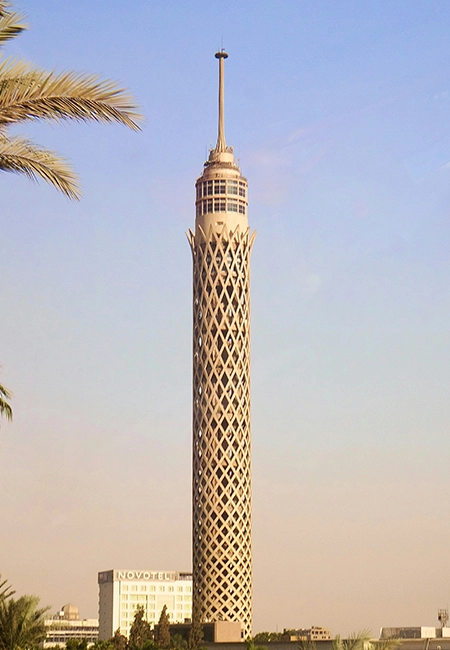


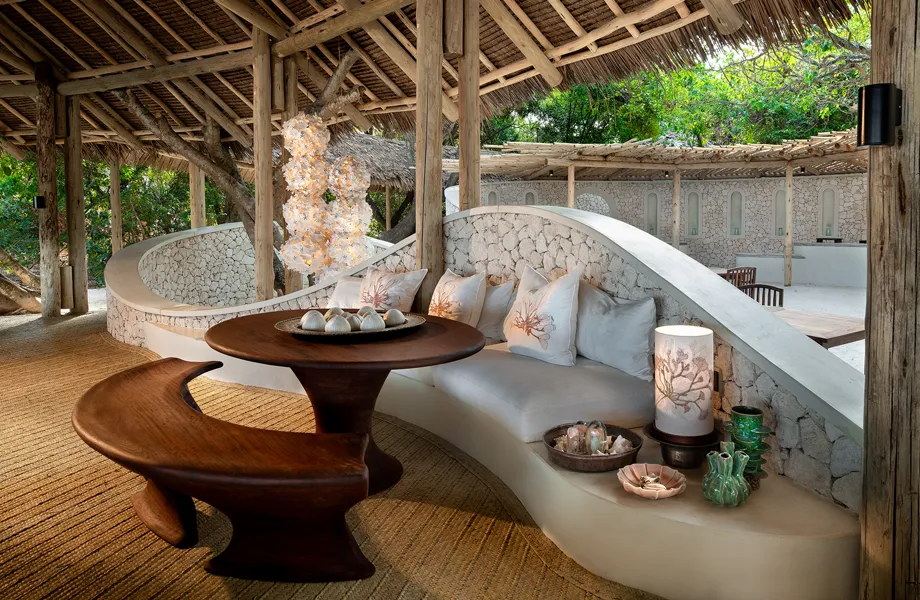
If the Pan African Architecture Biennale is asking what an architecture of the continent might look like, perhaps part of the answer lies not in inventing something entirely new, but in looking more carefully at what already exists.
For decades, the international architectural conversation has largely positioned Africa at its periphery. The continent has been studied, documented and occasionally celebrated, but too often through an external lens, its architecture reduced to a collection of familiar visual tropes: vernacular references, dramatic landscapes, safari lodges and carefully framed examples of development in the Global South.
In September 2026, that narrative is set to be challenged in Nairobi. The inaugural Pan African Architecture Biennale will bring together architectural voices from across the continent under the theme Shifting the Center: From Fragility to Resilience. Curated by Somali Italian architect Omar Degan in partnership with the Architectural Association of Kenya, the biennale is intended to become more than an exhibition. It is being conceived as a platform for African architects, designers, thinkers and communities to articulate their own ideas about the built environment and, importantly, their own futures.
The event opens on 7 September 2026 at Nairobi’s Kenyatta International Convention Centre, a fitting setting for an initiative concerned with questions of identity, independence and architectural authorship. Designed in the years following Kenyan independence, the KICC itself embodies an early attempt to establish an African modernity, combining international modernist influences with references to local architectural traditions. Its selection is therefore more than practical. The building becomes part of the argument.
Kenyatta International Convention Centre (KICC) in Nairobi
At the centre of Degan’s curatorial position is an insistence that Africa should no longer be treated simply as a place requiring solutions from elsewhere. Instead, the continent’s existing knowledge, ingenuity and experience should be recognised as sources of knowledge in their own right. The distinction is important.
Across Africa, architects and communities are already confronting many of the challenges that are becoming increasingly urgent elsewhere: rapid urbanisation, water scarcity, resource constraints, climate adaptation, housing shortages and environmental instability. In many contexts, these pressures have produced forms of architectural and social resilience that remain underrepresented in mainstream architectural discourse.
Degan’s own architectural practice has been shaped by working in fragile environments, including refugee camps, underserved neighbourhoods and areas affected by conflict and natural disasters. His perspective consequently moves beyond the idea of resilience as a fashionable sustainability term. Fragility, in this context, is understood as something produced by historical, political and spatial conditions, while resilience emerges through the ways people adapt, build and preserve knowledge in response.
The biennale consequently asks a more necessary question: what happens when the places traditionally regarded as needing architectural solutions become the places from which solutions are learned?
Perhaps one of the most significant ambitions of the biennale is to challenge the narrow visual language through which African architecture is often consumed internationally. African architecture can attract enormous attention when it fits a particular image of the continent. Natural materials, handcrafted details, remote landscapes and references to vernacular construction can all be celebrated, but often within a framework designed primarily for an external audience. The reality is considerably more complex.
Africa is a continent of 54 countries, hundreds of cultures and languages, rapidly expanding cities, rural communities, established architectural traditions and emerging technologies. There is no singular African architectural identity, and the biennale does not attempt to manufacture one. Instead, it seeks to make space for multiplicity, including projects and ideas that address land, migration, memory, climate, displacement, infrastructure and community. This is perhaps where the idea of shifting the centre becomes particularly compelling. The objective is not to create another international platform where Africa is represented as a category. It is to create a platform where African architects establish the terms of the conversation themselves. The distinction between representation and authorship is subtle, but profound.
Architecture is rarely neutral. The buildings and cities around us influence how we move, gather, work and interact, while decisions about land, infrastructure, housing and public space inevitably reflect broader political and social structures. Degan has spoken about architecture’s role in both oppression and liberation, particularly in cities shaped by colonial planning systems. The physical legacy of those systems remains visible across the continent, influencing patterns of segregation, access and development long after political independence.
The biennale therefore approaches architecture as more than an aesthetic discipline. Its programme will explore questions of identity, post colonialism, urban development, sustainability and African futures through exhibitions, discussions, workshops, installations and public events. Each of Africa’s 54 countries is expected to contribute a national perspective, alongside participation from the African diaspora and international contributors. The intention is not to exclude the rest of the world. Rather, it is to change the position from which international collaboration takes place.
One of the most interesting objectives of the biennale is its potential to challenge conventional assumptions of architectural design and materiality on the continent.
For decades, formal architectural education and global sustainability discourse have often privileged particular technologies, materials and construction systems. Yet across Africa, communities continue to employ techniques developed through generations of observation and adaptation to local climates and available resources.
Rammed earth, bamboo, passive cooling, water harvesting and other indigenous approaches can be dismissed as traditional or informal when viewed through conventional development frameworks. Yet many embody sophisticated responses to climate, material scarcity and resource management. The biennale intends to bring such knowledge into a broader architectural conversation rather than treating it as historical artefact.
Across the continent, a growing generation of architects and designers is developing practices that are increasingly confident in their cultural identity while remaining globally connected. African studios are receiving international recognition, locally produced materials and technologies are gaining attention, and conversations around climate, heritage, craft and social responsibility are becoming increasingly central to contemporary practice. What is changing is not simply the quality or visibility of the work. It is the confidence with which African practitioners are beginning to define the terms of the conversation.
Fox Browne Creative
While Africa’s urban centres are growing rapidly, the biennale recognises that rural environments remain equally important to the continent’s future. Rural migration is often driven not simply by an attraction to cities, but by a lack of access to education, healthcare, infrastructure and economic opportunity. Addressing those conditions becomes part of the architectural question. In this sense, resilience is not simply about making buildings stronger. It is about creating the social, environmental and spatial conditions that allow communities to thrive.
If the Pan African Architecture Biennale is asking what an architecture of the continent might look like, perhaps part of the answer lies not in inventing something entirely new, but in looking more carefully at what already exists.
All throughout Africa, generations of builders developed sophisticated responses to heat, humidity, rainfall, drought and locally available resources long before the arrival of mechanical cooling, industrial materials and contemporary construction systems. These responses were not simply aesthetic traditions. They were practical forms of environmental intelligence, shaped by climate, geography, culture and community.
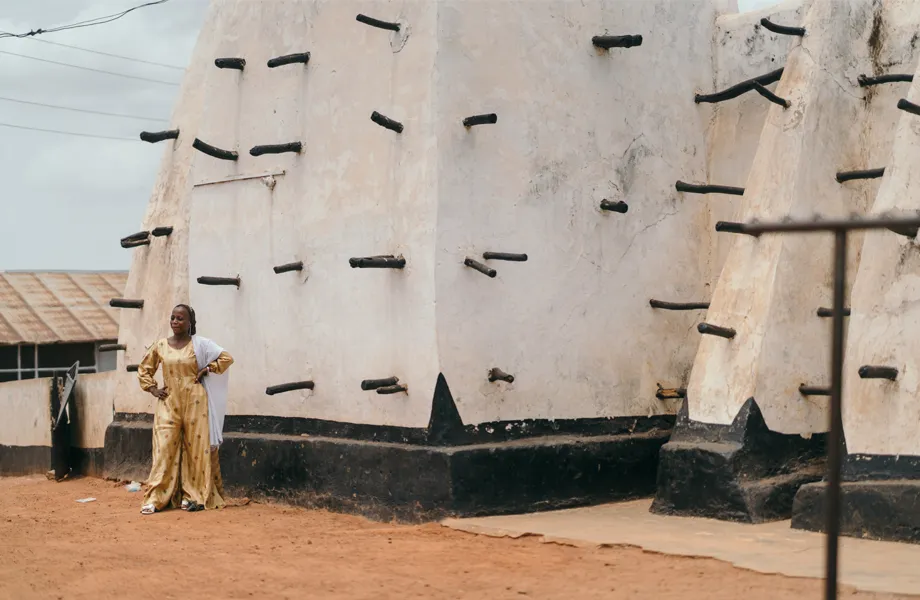
Ghana offers a particularly compelling example. Its architectural heritage reflects three markedly different ecological regions, from the hot coastal belt to the humid rainforest and dry northern savannah. Traditional buildings evolved in response to these conditions, with everything from roof forms and wall thickness to material selection and building orientation influenced by their immediate environment.
The most compelling aspect of the Pan African Architecture Biennale may ultimately be its ambition to become a living platform rather than a conventional architectural exhibition. Its programme is expected to include national exhibitions, keynote lectures, roundtables, workshops, community installations, cultural events and parallel programmes. Participation is intended to extend beyond architects to include artists, activists, curators, thinkers and communities.
The future of African cities will be shaped not only by architects, but by planners, engineers, artists, policymakers, developers, craftspeople, communities and the people who inhabit these places. Bringing those perspectives together creates the possibility of a richer conversation about what architecture can actually achieve. There is also something significant about the event taking place in Nairobi. The city is simultaneously a rapidly developing African capital, a centre for technology and culture, and a place where the contradictions of contemporary urbanisation are visible. Its combination of density, inequality, innovation, natural landscape and architectural history provides a particularly relevant setting for a conversation about the continent’s future.
If you are interested in attending book your tickets now: https://www.panafricanbiennale.org/tickets
RELATED
No Results Found
The page you requested could not be found. Try refining your search, or use the navigation above to locate the post.